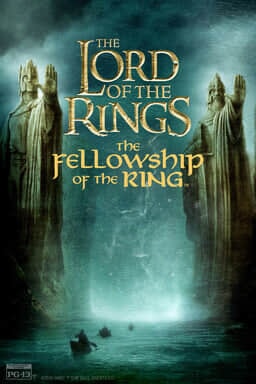
From the beginning, The Return of the King was the film Peter
Jackson couldn't wait to make. It had everything he would need --
real drama, deep emotions, fierce battles -- to wow audiences and
bring his trilogy to a rousing close.

Here, in the second of a two-part interview, Jackson goes into
details about the film he always believed would be his crowning
moment.

In your view, what makes The Return of the King the most
special of the three films?
It's the most emotional, and that's important, because no matter
how much spectacle we put on the screen, no matter the battles
and the visual effects, there's a point where people just want
the human story, the story they can relate to. Fortunately, The
Lord of the Rings as a book has wonderful human drama, so we were
able to really focus on that.

The sense of closure is also very rewarding…
The journeys these characters have been on, what they care about,
what they've been fighting for, what some of their friends have
died for, all leads to the events in The Return of the King.
There's a realization among the characters that everybody we have
met in the first two films is changed by the events in The Return
of the King. They'll never be the same again.

The relationship between Frodo and Sam moves to a new level in
the final film. Can you talk about that?
The Return of the King really does center on the last leg of
Frodo and Sam's journey to Mount Doom, and it focuses in
particular on the emotional impact this is having. Frodo and Sam
are affected in different ways, and yet they have to be together
to see this through. Frodo is the Ring Bearer, he's the only one
that can carry this Ring, and yet every footstep he takes closer
to Mount Doom, it's harder and harder for him. And Sam finds it
hard in a different way, because he's watching Frodo going
downhill. He can't physically take the ring off him and carry it
himself, he can only support Frodo. So the pressure is on Sam to
increase his purity, his courage and his commitment to Frodo.

Everybody's talking about Sean Astin's performance. Were you
expecting that kind of reaction?
Sean has done by far his best work of the trilogy in this film.
He plays wonderful scenes, has incredible emotion. It was
frustrating because we were shooting some of these scenes in
1999. I remember one day, when Sean had been very emotionally
intense in a scene on Mount Doom, I told him, "That is fantastic,
that is absolutely amazing. And you realize, it's going to be
four years before anybody sees this." He's been sitting patiently
waiting for the release of this film.

Can you go into the transformation experienced by Merry and
Pippin in The Return of the King?
These two little hobbits, neither of whom really have any desire
to become part of this conflict, are both dragged into war in a
way that neither of them can really help it. The reason why Merry
and Pippin stand up with huge courage is that they're committed
to helping Frodo. And they realize the best way to help him,
since they can't physically be with him, is to provide as much of
a diversion as they possibly can to take Sauron's eye away from
his own land.

Is there something especially poignant about the fact that the
film's bigger-than-life characters are the hobbits?
The four hobbits are very important characters because in a sense
they are us. I mean if there was anybody that we were relating to
by watching these films, it's the hobbits. They represent the
innocent person who has no experience of war, no experience of
conflict, who finds themselves suddenly in the middle of it all.
And in our own way, I think we would like to behave as Frodo and
Sam or Merry and Pippin do. We would hope that if we found
ourselves in this situation, that somewhere we would get the
courage to do what they do.

One of the most memorable characters in the entire trilogy is
Shelob. How did you manage to make her so frightening?
The scene in which Frodo encounters Shelob is a scene I've been
looking forward to doing right from the beginning, and I think it
's largely because I've got this incredible arachnophobia myself.
I mean I'm seriously scared of spiders. The design of Shelob is
based on a New Zealand spider called the Tunnel Web, which is a
spider I've been scared of ever since I was a child. And yeah,
the Shelob shots do make me want to flinch back, so I guess I'm
being successful at scaring myself.

The Battle of Pelennor Fields is such an impressive sequence.
What's the secret to capturing a battle of that
magnitude?
Battles are always a challenge. They have to tell a story. You
can't just have endless fighting, because that gets boring very
quickly. Fortunately a lot of our principal characters get
involved in Pelennor Fields. Gandalf, Pippin, Merry, Eowyn,
Theoden, Eomer, Aragorn, Legolas, Gimli--all of them get involved
in this battle. Focusing on those characters and telling their
stories within the spectacle of the battle is very important. You
never want it to become a battle that you're forced to sit and
watch. You have to be excited about what is happening to the
people that you really care about. That's really been the
challenge of the battles on these films.

What is it about these films that seems to touch people's
hearts?
Well, these films are truly timeless. That term is used a lot,
but the themes are as relevant today as they were 50 years ago
when Tolkien wrote the book. They were relevant 500 years ago.
It's basic human emotional stuff. It's friendship, it's courage,
it's loyalty, it's love, it's fear, it's good vs. evil. There is
nothing complicated about the themes. I mean for all the
complexity of The Lord of the Rings as a story, for all the
multitude of characters and funny place names, and things that
you struggle to remember, at its essence it's the most simple
themic material possible.

And the events of the final film drive those themes home…
What you find in The Return of the King especially are the
emotional moments of just admiring the courage of somebody,
admiring the selflessness of somebody, realizing that this person
is taking themselves to the point of death because of something
they believe in, because of somebody that they love. Those are
very basic, honorable themes, and they are all things that we
would ourselves like to aspire to. I think that's why it touches
people.

|